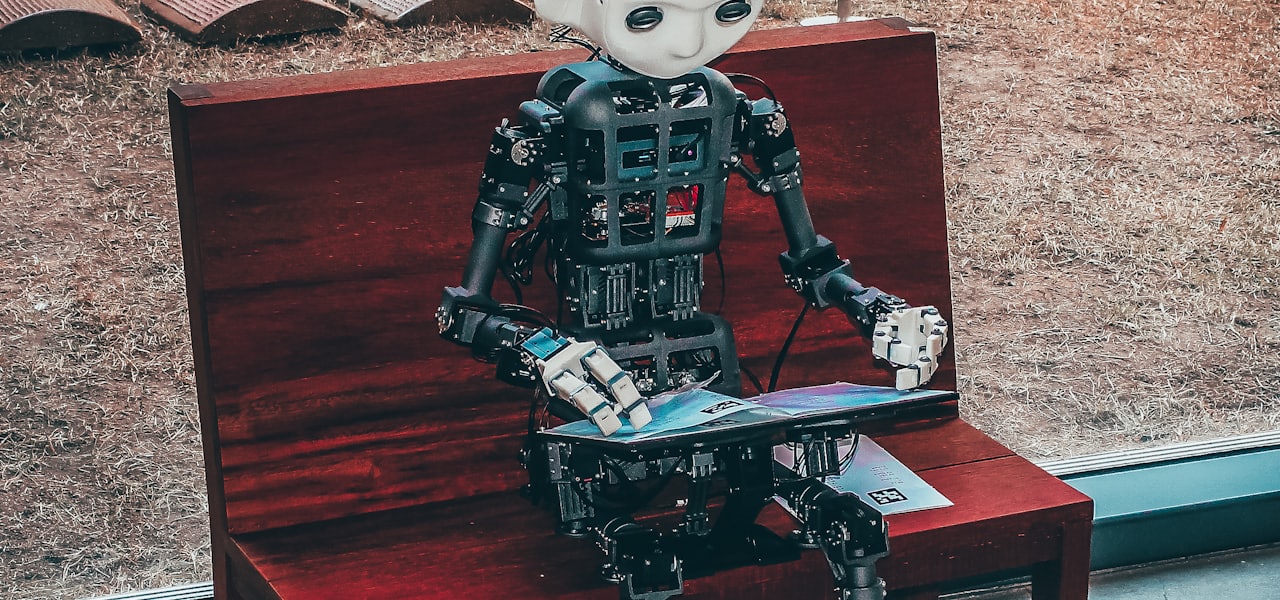
The term digital citizen is used with different meanings. According to the definition provided by Karen Mossberger, one of the authors of Digital Citizenship: The Internet, Society, and Participation, digital citizens are "those who use the internet regularly and effectively". In this sense, a digital citizen is a person who uses information technology (IT) to engage in society, politics, and government. More recent elaborations of the concept define digital citizenship as the self-enactment of people’s role in society through the use of digital technologies, stressing the empowering and democratizing characteristics of the citizenship idea. These theories aim at taking into account the ever-increasing datafication of contemporary societies (symbolically linked to the Snowden leaks), which has called into question the meaning of “being (digital) citizens in a datafied society”. This condition is also referred to as the “algorithmic society”, characterised by the increasing datafication of social life and the pervasive presence of surveillance practices – see surveillance and surveillance capitalism, the use of artificial intelligence, and Big Data. Datafication presents crucial challenges for the very notion of citizenship, so that data collection can no longer be seen as an issue of privacy alone so that:We cannot simply assume that being a citizen online already means something (whether it is the ability to participate or the ability to stay safe) and then look for those whose conduct conforms to this meaning Instead, the idea of digital citizenship shall reflect the idea that we are no longer mere “users” of technologies since they shape our agency both as individuals and as citizens. Digital citizenship refers to the responsible and respectful use of technology to engage online, evaluate information, and protect human rights. It encompasses skills for communication, collaboration, empathy, privacy protection, and security to prevent data breaches and identity theft. == Digital citizenship in the "algorithmic society" == In the context of the algorithmic society, the question of digital citizenship "becomes one of the extents to which subjects are able to challenge, avoid or mediate their data double in this datafied society”. These reflections put the emphasis on the idea of the digital space (or cyberspace) as a political space where the respect of fundamental rights of the individual shall be granted (with reference both to the traditional ones as well as to new specific rights of the internet [see “digital constitutionalism”]) and where the agency and the identity of the individuals as citizens is at stake. This idea of digital citizenship is thought to be not only active but also performative, in the sense that “in societies that are increasingly mediated through digital technologies, digital acts become important means through which citizens create, enact and perform their role in society.” In particular, for Isin and Ruppert this points towards an active meaning of (digital) citizenship based on the idea that we constitute ourselves as digital citizen by claiming rights on the internet, either by saying or by doing something. == Types of digital participation == People who characterize themselves as digital citizens often use IT extensively—creating blogs, using social networks, and participating in online journalism. Although digital citizenship begins when any child, teen, or adult signs up for an email address, posts pictures online, uses e-commerce to buy merchandise online, and/or participates in any electronic function that is B2B or B2C, the process of becoming a digital citizen goes beyond simple internet activity. According to Thomas Humphrey Marshall, a British sociologist known for his work on social citizenship, a primary framework of citizenship comprises three different traditions: liberalism, republicanism, and ascriptive hierarchy. Within this framework, the digital citizen needs to exist in order to promote equal economic opportunities and increase political participation. In this way, digital technology helps to lower the barriers to entry for participation as a citizen within a society. They also have a comprehensive understanding of digital citizenship, which is the appropriate and responsible behavior when using technology. Since digital citizenship evaluates the quality of an individual's response to membership in a digital community, it often requires the participation of all community members, both visible and those who are less visible. A large part in being a responsible digital citizen encompasses digital literacy, etiquette, online safety, and an acknowledgement of private versus public information. The development of digital citizen participation can be divided into two main stages. The first stage is through information dissemination, which includes subcategories of its own: static information dissemination, characterized largely by citizens who use read-only websites where they take control of data from credible sources in order to formulate judgments or facts. Many of these websites where credible information may be found are provided by the government. dynamic information dissemination, which is more interactive and involves citizens as well as public servants. Both questions and answers can be communicated, and citizens have the opportunity to engage in question-and-answer dialogues through two-way communication platforms The second stage of digital citizen participation is citizen deliberation, which evaluates what type of participation and role that they play when attempting to ignite some sort of policy change. static citizen participants can play a role by engaging in online polls as well as through complaints and recommendations sent up, mainly toward the government who can create changes in policy decisions. dynamic citizen participants can deliberate amongst others on their thoughts and recommendations in town hall meetings or various media sites. One potential advantage of online participation through digital citizenship is increased social inclusion. In a report on civic engagement, citizen-powered democracy can be initiated either through information shared through the web, direct communication signals made by the state toward the public, and social media tactics from both private and public companies. In fact, it was found that the community-based nature of social media platforms allow individuals to feel more socially included and informed about political issues that peers have also been found to engage with, otherwise known as a "second-order effect." Understanding strategic marketing on social media would further explain social media customers’ participation. Two types of opportunities rise as a result, the first being the ability to lower barriers that can make exchanges much easier. In addition, they have the chance to participate in transformative disruption, giving people who have a historically lower political engagement to mobilize in a much easier and convenient fashion. Nonetheless, there are several challenges that face the presence of digital technologies in political participation. Both current as well as potential challenges can create significant risks for democratic processes. Not only is digital technology still seen as relatively ambiguous, it was also seen to have "less inclusivity in democratic life." Demographic groups differ considerably in the use of technology, and thus, one group could potentially be more represented than another as a result of digital participation. Another primary challenge consists in the ideology of a "filter bubble" effect. Alongside a tremendous spread of false information, internet users could reinforce existing prejudices and assist in polarizing disagreements in the public sphere. This can lead to misinformed voting and decisions based on exposure rather than on pure knowledge. A communication technology director, Van Dijk, stated, "Computerized information campaigns and mass public information systems have to be designed and supported in such a way that they help to narrow the gap between the 'information rich' and 'information poor' otherwise the spontaneous development of ICT will widen it." Access and equivalent amounts of knowledge behind digital technology must be equivalent in order for a fair system to put into place. Alongside a lack of evidenced support for technology that can be proven to be safe for citizens, the OECD has identified five struggles for the online engagement of citizens: Scale: To what extent can a society allow every individual's voice to be heard, but also not be lost in the mass debate? This can be extremely challenging for the government, which may not effectively know how to listen and respond to each individual contribution. Capacity: How can digital technology offer citizens more information on public policy-making? The opportunity for citizens to debate with one another is lacking for acti
Himmat (app)
Himmat is a women's safety mobile application of Delhi Police. It was launched by Home Minister Rajnath Singh on 1 January 2015. The app is freely available for Android mobile phones and can be downloaded from Delhi Police website. Delhi Police plans to launch app for other platforms in future. Low registrations and other problems resulted in a parliamentary panel calling the app a failure in 2018. Himmat has gone on to be called as one of India's best safety apps for women.
India AI Impact Summit 2026
The India AI Impact Summit 2026 (also abbreviated as the AI Impact Summit) was an international summit on artificial intelligence held at Bharat Mandapam, New Delhi, India, from 16 to 21 February 2026. It is the fourth in a series of global AI summits following the Bletchley Park AI Safety Summit in 2023, the AI Seoul Summit in 2024, and the AI Action Summit in Paris in 2025. Organised under the IndiaAI Mission by the Ministry of Electronics and Information Technology, it is the first summit in the series to be hosted by a Global South nation. This series of AI summits will continue with the AI Summit in Geneva to be hosted by Switzerland in 2027. The summit was inaugurated by Prime Minister Narendra Modi on 19 February 2026. The opening ceremony was also addressed by French President Emmanuel Macron and United Nations Secretary-General António Guterres. The summit was attended by over 20 heads of state and a delegation of global technology leaders including Sundar Pichai (Google), Sam Altman (OpenAI), and Demis Hassabis (DeepMind). The event faced criticism for organisational issues, misrepresentation of non-Indian products as Indian, and a perceived focus on trade fair activities over substantive governance. == Background == The AI Impact Summit was an international summit on artificial intelligence (AI) held in New Delhi from 16 to 20 February 2026. It followed the AI Action Summit in Paris in February 2025, the AI Seoul Summit in 2024 and the Bletchley Park AI Safety Summit in 2023. According to Crowell & Moring, the changing summit titles seemed to reflect a broader shift in focus away from AI safety and governance toward practical impact, implementation, and measurable outcomes. Ahead of the summit, an international panel of experts published the second International AI Safety Report. The summit was structured around three foundational pillars, termed "Sutras": People, Planet, and Progress. Seven thematic working groups were established to deliver outcomes across these pillars, covering AI for economic growth and social good; democratising AI resources; inclusion for social empowerment; safe and trusted AI; human capital; science; and resilience, innovation, and efficiency. == Programme == The summit ran over five days, later extended to six following overwhelming public response. Originally scheduled to conclude on 20 February, the event was extended to 21 February with expanded evening hours for the exhibition. === India AI Impact Expo === The India AI Impact Expo, inaugurated by Prime Minister Modi on 16 February, featured over 300 exhibitors from 30 countries across more than 10 thematic pavilions. Pavilions were organised across thematic zones aligned with the summit's three pillars, showcasing AI applications in healthcare, agriculture, education, and sustainable industry. === Leaders' Plenary and CEO Roundtable === The Leaders' Plenary on 19 February brought together heads of state, ministers, and representatives from multilateral institutions to outline national and global priorities on AI governance, infrastructure, and international cooperation. A CEO Roundtable, held the same evening, convened senior executives from global technology and industry firms with government leaders to discuss investment, research collaboration, and deployment of AI systems. === Research Symposium === A Research Symposium on AI and its Impact was held on 18 February, with the IIIT Hyderabad as knowledge partner. Discussions covered sovereign AI infrastructure, global adoption challenges, research breakthroughs, and policy priorities. == Participants == The summit drew delegations from over 100 countries, including more than 20 heads of state and 60 ministers. Notable attendees from the technology industry included Sundar Pichai (Google), Sam Altman (OpenAI), Dario Amodei (Anthropic), Demis Hassabis (Google DeepMind), and Mukesh Ambani (Reliance Industries). Representatives from multilateral institutions included Sangbu Kim of the World Bank. == Announcements and outcomes == === Indian AI models === Several Indian AI models and products were unveiled during the summit. Sarvam AI, an Indian AI laboratory, launched a new generation of large language models, including 30-billion and 105-billion parameter models using a mixture of experts architecture, as well as text-to-speech, speech-to-text, and vision models. Sarvam also introduced the Kaze smartglasses, described as the company's first hardware product, which Prime Minister Modi tested at the expo. The government-backed BharatGen Param2 model, a 17-billion parameter model supporting 22 Indian languages with multimodal capabilities, was also launched at the summit. === Infrastructure commitments === Union Minister Ashwini Vaishnaw outlined India's "whole-of-nation" AI strategy, describing plans to build a "frugal, sovereign and scalable" AI ecosystem. The government announced plans to add more than 20,000 GPUs to India's existing base of 38,000 under the IndiaAI Compute Portal. Microsoft announced at the summit that it was on track to invest US$50 billion by the end of the decade to bring AI to lower-income countries. Goa reaffirmed its commitment to artificial intelligence at the India AI Impact Summit 2026. === Guinness World Record === During the summit, India set a Guinness World Record for the most pledges received for an AI responsibility campaign in 24 hours, with 250,946 valid pledges collected between 16 and 17 February 2026. The campaign, conducted in partnership with Intel India as part of the IndiaAI Mission, exceeded its initial target of 5,000 pledges. == Controversies and criticisms == === Galgotias University incident === On 18 February, Galgotias University faced widespread criticism after a representative presented a robot dog at the university's exhibition pavilion as an indigenous development. Social media users identified the robot as the Unitree Go2, a commercially available product manufactured by Chinese company Unitree Robotics. IT Secretary S. Krishnan stated that the government did not want exhibitors to showcase items that were not their own, and the university was directed to vacate its stall. Galgotias University issued an apology, stating that the representative had been "ill-informed" and was not authorised to speak to the press. The incident drew political reactions, with the Indian National Congress using it to criticise the government. The controversy was amplified after Union IT Minister Ashwini Vaishnaw had earlier shared a video clip of the robot on social media, which was subsequently deleted. === Organisational issues === On day 1 of the Summit, Dhananjay Yadav, a Bengaluru-based entrepreneur had alleged that his product was stolen in the Summit. He called it as a pain for the people in an X post. He further wrote, "Think about this: We paid for flights, accommodation, logistics and even the booth. Only to see our wearables disappear inside a high-security zone". Later, the stolen devices were recovered by The Delhi Police. Bloomberg reported that delegates were left stranded without food or water during a security lockdown ahead of the Prime Minister's visit on 19 February. The summit venue was closed to the public on 19 February for the Prime Minister's visit, leading to criticism from attendees who had registered for that day. === Protests by the Indian Youth Congress (IYC) === On 20 February, some members of the Indian Youth Congress (IYC) carried out protests inside the venue with slogans such as "PM is compromised" and the criticism of the recent trade deal between India and the US. 4 of these members were sent to police custody by the court on 22 February. While Bharatiya Janta Party condemned these protests, with its spokesperson Shehzad Poonawalla saying, "From being anti-BJP, you have gone to being anti-national? If you have a problem with the BJP, then protest at the BJP office, Jantar Mantar, or outside the PM's office. But the people of the country and their alliance partners condemn them for their attempt to defame India in front of the entire world at the AI Summit." Congress leader Harish Rawat defended the protests, saying "it's also a fact that AI might become a tool in the hands of a few individuals… It's the opposition's job to warn against that… It's not the first time such international events have been opposed. I know how the BJP protested during the Commonwealth Games… To say that such opposition has happened for the first time is not correct. The BJP has been doing this while in the opposition." These protestors were granted bail by the Delhi high court on 2 March. == Reception and analysis == Bloomberg News reported that Prime Minister Modi used the summit to assert India's global AI ambitions following a challenging year in foreign policy. TechPolicy.Press published several critical analyses of the summit. One article argued that the summit's structure granted "multinational corporations parity with sovereign governments
Pop music automation
Pop music automation is a field of study among musicians and computer scientists with a goal of producing successful pop music algorithmically. It is often based on the premise that pop music is especially formulaic, unchanging, and easy to compose. The idea of automating pop music composition is related to many ideas in algorithmic music, artificial intelligence (AI) and computational creativity. == History of automation in music == Algorithms (or, at the very least, formal sets of rules) have been used to compose music for centuries; the procedures used to plot voice-leading in counterpoint, for example, can often be reduced to algorithmic determinant. Now the term is usually reserved, however, for the use of formal procedures to make music without human intervention. Classical music automation software exists that generates music in the style of Mozart and Bach and jazz. Most notably, David Cope has written a software system called "Experiments in Musical Intelligence" (or "EMI") that is capable of analyzing and generalizing from existing music by a human composer to generate novel musical compositions in the same style. EMI's output is convincing enough to persuade human listeners that its music is human-generated to a high level of competence. Creativity research in jazz has focused on the process of improvisation and the cognitive demands that this places on a musical agent: reasoning about time, remembering and conceptualizing what has already been played, and planning ahead for what might be played next. Inevitably associated with pop music automation is pop music analysis. Projects in pop music automation may include, but are not limited to, ideas in melody creation and song development, vocal generation or improvement, automatic accompaniment and lyric composition. == Automatic accompaniment == Some systems exist that automatically choose chords to accompany a vocal melody in real-time. A user with no musical experience can create a song with instrumental accompaniment just by singing into a microphone. An example is a Microsoft Research project called Songsmith, which trains a Hidden Markov model using a music database and uses that model to select chords for new melodies. == Melody generation == Automatic melody generation is often done with a Markov chain, the states of the system become note or pitch values, and a probability vector for each note is constructed, completing a transition probability matrix (see below). An algorithm is constructed to produce an output note values based on the transition matrix weightings, which could be MIDI note values, frequency (Hz), or any other desirable metric. A second-order Markov chain can be introduced by considering the current state and also the previous state, as indicated in the second table. Higher, nth-order chains tend to "group" particular notes together, while 'breaking off' into other patterns and sequences occasionally. These higher-order chains tend to generate results with a sense of phrasal structure, rather than the 'aimless wandering' produced by a first-order system. == Lyric composition == Automated lyric creating software may take forms such as: Selecting words according to their rhythm The Tra-la-Lyrics system produces song lyrics, in Portuguese, for a given melody. This not only involves matching each word syllable with a note in the melody, but also matching the word's stress with the strong beats of the melody. Parsing existing pop music (e.g. for content or word choice) This involves natural language processing. Pablo Gervás has developed a noteworthy system called ASPERA that employs a case-based reasoning (CBR) approach to generating poetic formulations of a given input text via a composition of poetic fragments that are retrieved from a case-base of existing poems. Each poem fragment in the ASPERA case-base is annotated with a prose string that expresses the meaning of the fragment, and this prose string is used as the retrieval key for each fragment. Metrical rules are then used to combine these fragments into a well-formed poetic structure. Automatic analogy or story creation Programs like TALE-SPIN and The MINSTREL system represent a complex elaboration of this basis approach, distinguishing a range of character-level goals in the story from a range of author-level goals for the story. Systems like Bringsjord's BRUTUS can create stories with complex interpersonal themes like betrayal. On-line metaphor generation systems like 'Sardonicus' or 'Aristotle' can suggest lexical metaphors for a given descriptive goal (e.g., to describe a supermodel as skinny, the source terms “pencil”, “whip”, “whippet”, “rope”, “stick-insect” and “snake” are suggested). Free association of grouped words Using a language database (such as wordnet) one can create musings on a subject that may be weak grammatically but are still sensical. See such projects as the Flowerewolf automatic poetry generator or the Dada engine. == Software == === More or less free === BreathCube by xoxos. Simple lyrical vocal content is generated with simple music. CubeBreath by xoxos. Audio input is vocoded in tune with the music. Midi Internet Algorithmic Composition infno, infinite generator of electronic dance music and synth-pop. Algorithmic Trap, trap beat generator. === Commercial === Band in a box generates any element, potentially creates whole new songs from scratch. Musical Palette - Melody Composing Tool SongSmith: Automatic accompaniment for vocal melodies Ludwig 3.0 automatic accompaniment, writes arrangements for given instruments, plays its own songs for an infinitely long time. Automated Composing System creates music in many different styles
Tensor network
Tensor networks or tensor network states are a class of variational wave functions used in the study of many-body quantum systems and fluids. Tensor networks extend one-dimensional matrix product states to higher dimensions while preserving some of their useful mathematical properties. The wave function is encoded as a tensor contraction of a network of individual tensors. The structure of the individual tensors can impose global symmetries on the wave function (such as antisymmetry under exchange of fermions) or restrict the wave function to specific quantum numbers, like total charge, angular momentum, or spin. It is also possible to derive strict bounds on quantities like entanglement and correlation length using the mathematical structure of the tensor network. This has made tensor networks useful in theoretical studies of quantum information in many-body systems. They have also proved useful in variational studies of ground states, excited states, and dynamics of strongly correlated many-body systems. == Diagrammatic notation == In general, a tensor network diagram (Penrose diagram) can be viewed as a graph where nodes (or vertices) represent individual tensors, while edges represent summation over an index. Free indices are depicted as edges (or legs) attached to a single vertex only. Sometimes, there is also additional meaning to a node's shape. For instance, one can use trapezoids for unitary matrices or tensors with similar behaviour. This way, flipped trapezoids would be interpreted as complex conjugates to them. == History == Foundational research on tensor networks began in 1971 with a paper by Roger Penrose. In "Applications of negative dimensional tensors" Penrose developed tensor diagram notation, describing how the diagrammatic language of tensor networks could be used in applications in physics. In 1992, Steven R. White developed the density matrix renormalization group (DMRG) for quantum lattice systems. The DMRG was the first successful tensor network and associated algorithm. In 2002, Guifré Vidal and Reinhard Werner attempted to quantify entanglement, laying the groundwork for quantum resource theories. This was also the first description of the use of tensor networks as mathematical tools for describing quantum systems. In 2004, Frank Verstraete and Ignacio Cirac developed the theory of matrix product states, projected entangled pair states, and variational renormalization group methods for quantum spin systems. In 2006, Vidal developed the multi-scale entanglement renormalization ansatz (MERA). In 2007 he developed entanglement renormalization for quantum lattice systems. In 2010, Ulrich Schollwock developed the density-matrix renormalization group for the simulation of one-dimensional strongly correlated quantum lattice systems. In 2014, Román Orús introduced tensor networks for complex quantum systems and machine learning, as well as tensor network theories of symmetries, fermions, entanglement and holography. == Connection to machine learning == Tensor networks have been adapted for supervised learning, taking advantage of similar mathematical structure in variational studies in quantum mechanics and large-scale machine learning. This crossover has spurred collaboration between researchers in artificial intelligence and quantum information science. In June 2019, Google, the Perimeter Institute for Theoretical Physics, and X (company), released TensorNetwork, an open-source library for efficient tensor calculations. The main interest in tensor networks and their study from the perspective of machine learning is to reduce the number of trainable parameters (in a layer) by approximating a high-order tensor with a network of lower-order ones. Using the so-called tensor train technique (TT), one can reduce an N-order tensor (containing exponentially many trainable parameters) to a chain of N tensors of order 2 or 3, which gives us a polynomial number of parameters.
Foreign key
A foreign key is a set of attributes in a table that refers to the primary key of another table, linking these two tables. In the context of relational databases, a foreign key is subject to an inclusion dependency constraint that the tuples consisting of the foreign key attributes in one relation, R, must also exist in some other (not necessarily distinct) relation, S; furthermore that those attributes must also be a candidate key in S. In other words, a foreign key is a set of attributes that references a candidate key. For example, a table called TEAM may have an attribute, MEMBER_NAME, which is a foreign key referencing a candidate key, PERSON_NAME, in the PERSON table. Since MEMBER_NAME is a foreign key, any value existing as the name of a member in TEAM must also exist as a person's name in the PERSON table; in other words, every member of a TEAM is also a PERSON. == Summary == The table containing the foreign key is called the child table, and the table containing the candidate key is called the referenced or parent table. In database relational modeling and implementation, a candidate key is a set of zero or more attributes, the values of which are guaranteed to be unique for each tuple (row) in a relation. The value or combination of values of candidate key attributes for any tuple cannot be duplicated for any other tuple in that relation. Since the purpose of the foreign key is to identify a particular row of referenced table, it is generally required that the foreign key is equal to the candidate key in some row of the primary table, or else have no value (the NULL value.). This rule is called a referential integrity constraint between the two tables. Because violations of these constraints can be the source of many database problems, most database management systems provide mechanisms to ensure that every non-null foreign key corresponds to a row of the referenced table. For example, consider a database with two tables: a CUSTOMER table that includes all customer data and an ORDER table that includes all customer orders. Suppose the business requires that each order must refer to a single customer. To reflect this in the database, a foreign key column is added to the ORDER table (e.g., CUSTOMERID), which references the primary key of CUSTOMER (e.g. ID). Because the primary key of a table must be unique, and because CUSTOMERID only contains values from that primary key field, we may assume that, when it has a value, CUSTOMERID will identify the particular customer which placed the order. However, this can no longer be assumed if the ORDER table is not kept up to date when rows of the CUSTOMER table are deleted or the ID column altered, and working with these tables may become more difficult. Many real world databases work around this problem by 'inactivating' rather than physically deleting master table foreign keys, or by complex update programs that modify all references to a foreign key when a change is needed. Foreign keys play an essential role in database design. One important part of database design is making sure that relationships between real-world entities are reflected in the database by references, using foreign keys to refer from one table to another. Another important part of database design is database normalization, in which tables are broken apart and foreign keys make it possible for them to be reconstructed. Multiple rows in the referencing (or child) table may refer to the same row in the referenced (or parent) table. In this case, the relationship between the two tables is called a one to many relationship between the referencing table and the referenced table. In addition, the child and parent table may, in fact, be the same table, i.e. the foreign key refers back to the same table. Such a foreign key is known in SQL:2003 as a self-referencing or recursive foreign key. In database management systems, this is often accomplished by linking a first and second reference to the same table. A table may have multiple foreign keys, and each foreign key can have a different parent table. Each foreign key is enforced independently by the database system. Therefore, cascading relationships between tables can be established using foreign keys. A foreign key is defined as an attribute or set of attributes in a relation whose values match a primary key in another relation. The syntax to add such a constraint to an existing table is defined in SQL:2003 as shown below. Omitting the column list in the REFERENCES clause implies that the foreign key shall reference the primary key of the referenced table. Likewise, foreign keys can be defined as part of the CREATE TABLE SQL statement. If the foreign key is a single column only, the column can be marked as such using the following syntax: Foreign keys can be defined with a stored procedure statement. child_table: the name of the table or view that contains the foreign key to be defined. parent_table: the name of the table or view that has the primary key to which the foreign key applies. The primary key must already be defined. col3 and col4: the name of the columns that make up the foreign key. The foreign key must have at least one column and at most eight columns. == Referential actions == Because the database management system enforces referential constraints, it must ensure data integrity if rows in a referenced table are to be deleted (or updated). If dependent rows in referencing tables still exist, those references have to be considered. SQL:2003 specifies 5 different referential actions that shall take place in such occurrences: CASCADE RESTRICT NO ACTION SET NULL SET DEFAULT === CASCADE === Whenever rows in the parent (referenced) table are deleted (or updated), the respective rows of the child (referencing) table with a matching foreign key column will be deleted (or updated) as well. This is called a cascade delete (or update). === RESTRICT === A value cannot be updated or deleted when a row exists in a referencing or child table that references the value in the referenced table. Similarly, a row cannot be deleted as long as there is a reference to it from a referencing or child table. To understand RESTRICT (and CASCADE) better, it may be helpful to notice the following difference, which might not be immediately clear. The referential action CASCADE modifies the "behavior" of the (child) table itself where the word CASCADE is used. For example, ON DELETE CASCADE effectively says "When the referenced row is deleted from the other table (master table), then delete also from me". However, the referential action RESTRICT modifies the "behavior" of the master table, not the child table, although the word RESTRICT appears in the child table and not in the master table! So, ON DELETE RESTRICT effectively says: "When someone tries to delete the row from the other table (master table), prevent deletion from that other table (and of course, also don't delete from me, but that's not the main point here)." RESTRICT is not supported by Microsoft SQL 2012 and earlier. === NO ACTION === NO ACTION and RESTRICT are very much alike. The main difference between NO ACTION and RESTRICT is that with NO ACTION the referential integrity check is done after trying to alter the table. RESTRICT does the check before trying to execute the UPDATE or DELETE statement. Both referential actions act the same if the referential integrity check fails: the UPDATE or DELETE statement will result in an error. In other words, when an UPDATE or DELETE statement is executed on the referenced table using the referential action NO ACTION, the DBMS verifies at the end of the statement execution that none of the referential relationships are violated. This is different from RESTRICT, which assumes at the outset that the operation will violate the constraint. Using NO ACTION, the triggers or the semantics of the statement itself may yield an end state in which no foreign key relationships are violated by the time the constraint is finally checked, thus allowing the statement to complete successfully. === SET NULL, SET DEFAULT === In general, the action taken by the DBMS for SET NULL or SET DEFAULT is the same for both ON DELETE or ON UPDATE: the value of the affected referencing attributes is changed to NULL for SET NULL, and to the specified default value for SET DEFAULT. === Triggers === Referential actions are generally implemented as implied triggers (i.e. triggers with system-generated names, often hidden.) As such, they are subject to the same limitations as user-defined triggers, and their order of execution relative to other triggers may need to be considered; in some cases it may become necessary to replace the referential action with its equivalent user-defined trigger to ensure proper execution order, or to work around mutating-table limitations. Another important limitation appears with transaction isolation: your changes to a row may not be able to fully cascade because the row is ref
T-norm fuzzy logics
T-norm fuzzy logics are a family of non-classical logics, informally delimited by having a semantics that takes the real unit interval [0, 1] for the system of truth values and functions called t-norms for permissible interpretations of conjunction. They are mainly used in applied fuzzy logic and fuzzy set theory as a theoretical basis for approximate reasoning. T-norm fuzzy logics belong in broader classes of fuzzy logics and many-valued logics. In order to generate a well-behaved implication, the t-norms are usually required to be left-continuous; logics of left-continuous t-norms further belong in the class of substructural logics, among which they are marked with the validity of the law of prelinearity, (A → B) ∨ (B → A). Both propositional and first-order (or higher-order) t-norm fuzzy logics, as well as their expansions by modal and other operators, are studied. Logics that restrict the t-norm semantics to a subset of the real unit interval (for example, finitely valued Łukasiewicz logics) are usually included in the class as well. Important examples of t-norm fuzzy logics are monoidal t-norm logic (MTL) of all left-continuous t-norms, basic logic (BL) of all continuous t-norms, product fuzzy logic of the product t-norm, or the nilpotent minimum logic of the nilpotent minimum t-norm. Some independently motivated logics belong among t-norm fuzzy logics, too, for example Łukasiewicz logic (which is the logic of the Łukasiewicz t-norm) or Gödel–Dummett logic (which is the logic of the minimum t-norm). == Motivation == As members of the family of fuzzy logics, t-norm fuzzy logics primarily aim at generalizing classical two-valued logic by admitting intermediary truth values between 1 (truth) and 0 (falsity) representing degrees of truth of propositions. The degrees are assumed to be real numbers from the unit interval [0, 1]. In propositional t-norm fuzzy logics, propositional connectives are stipulated to be truth-functional, that is, the truth value of a complex proposition formed by a propositional connective from some constituent propositions is a function (called the truth function of the connective) of the truth values of the constituent propositions. The truth functions operate on the set of truth degrees (in the standard semantics, on the [0, 1] interval); thus the truth function of an n-ary propositional connective c is a function Fc: [0, 1]n → [0, 1]. Truth functions generalize truth tables of propositional connectives known from classical logic to operate on the larger system of truth values. T-norm fuzzy logics impose certain natural constraints on the truth function of conjunction. The truth function ∗ : [ 0 , 1 ] 2 → [ 0 , 1 ] {\displaystyle \colon [0,1]^{2}\to [0,1]} of conjunction is assumed to satisfy the following conditions: Commutativity, that is, x ∗ y = y ∗ x {\displaystyle xy=yx} for all x and y in [0, 1]. This expresses the assumption that the order of fuzzy propositions is immaterial in conjunction, even if intermediary truth degrees are admitted. Associativity, that is, ( x ∗ y ) ∗ z = x ∗ ( y ∗ z ) {\displaystyle (xy)z=x(yz)} for all x, y, and z in [0, 1]. This expresses the assumption that the order of performing conjunction is immaterial, even if intermediary truth degrees are admitted. Monotony, that is, if x ≤ y {\displaystyle x\leq y} then x ∗ z ≤ y ∗ z {\displaystyle xz\leq yz} for all x, y, and z in [0, 1]. This expresses the assumption that increasing the truth degree of a conjunct should not decrease the truth degree of the conjunction. Neutrality of 1, that is, 1 ∗ x = x {\displaystyle 1x=x} for all x in [0, 1]. This assumption corresponds to regarding the truth degree 1 as full truth, conjunction with which does not decrease the truth value of the other conjunct. Together with the previous conditions this condition ensures that also 0 ∗ x = 0 {\displaystyle 0x=0} for all x in [0, 1], which corresponds to regarding the truth degree 0 as full falsity, conjunction with which is always fully false. Continuity of the function ∗ {\displaystyle } (the previous conditions reduce this requirement to the continuity in either argument). Informally this expresses the assumption that microscopic changes of the truth degrees of conjuncts should not result in a macroscopic change of the truth degree of their conjunction. This condition, among other things, ensures a good behavior of (residual) implication derived from conjunction; to ensure the good behavior, however, left-continuity (in either argument) of the function ∗ {\displaystyle } is sufficient. In general t-norm fuzzy logics, therefore, only left-continuity of ∗ {\displaystyle } is required, which expresses the assumption that a microscopic decrease of the truth degree of a conjunct should not macroscopically decrease the truth degree of conjunction. These assumptions make the truth function of conjunction a left-continuous t-norm, which explains the name of the family of fuzzy logics (t-norm based). Particular logics of the family can make further assumptions about the behavior of conjunction (for example, Gödel–Dummett logic requires its idempotence) or other connectives (for example, the logic IMTL (involutive monoidal t-norm logic) requires the involutiveness of negation). All left-continuous t-norms ∗ {\displaystyle } have a unique residuum, that is, a binary function ⇒ {\displaystyle \Rightarrow } such that for all x, y, and z in [0, 1], x ∗ y ≤ z {\displaystyle xy\leq z} if and only if x ≤ y ⇒ z . {\displaystyle x\leq y\Rightarrow z.} The residuum of a left-continuous t-norm can explicitly be defined as ( x ⇒ y ) = sup { z ∣ z ∗ x ≤ y } . {\displaystyle (x\Rightarrow y)=\sup\{z\mid zx\leq y\}.} This ensures that the residuum is the pointwise largest function such that for all x and y, x ∗ ( x ⇒ y ) ≤ y . {\displaystyle x(x\Rightarrow y)\leq y.} The latter can be interpreted as a fuzzy version of the modus ponens rule of inference. The residuum of a left-continuous t-norm thus can be characterized as the weakest function that makes the fuzzy modus ponens valid, which makes it a suitable truth function for implication in fuzzy logic. Left-continuity of the t-norm is the necessary and sufficient condition for this relationship between a t-norm conjunction and its residual implication to hold. Truth functions of further propositional connectives can be defined by means of the t-norm and its residuum, for instance the residual negation ¬ x = ( x ⇒ 0 ) {\displaystyle \neg x=(x\Rightarrow 0)} or bi-residual equivalence x ⇔ y = ( x ⇒ y ) ∗ ( y ⇒ x ) . {\displaystyle x\Leftrightarrow y=(x\Rightarrow y)(y\Rightarrow x).} Truth functions of propositional connectives may also be introduced by additional definitions: the most usual ones are the minimum (which plays a role of another conjunctive connective), the maximum (which plays a role of a disjunctive connective), or the Baaz Delta operator, defined in [0, 1] as Δ x = 1 {\displaystyle \Delta x=1} if x = 1 {\displaystyle x=1} and Δ x = 0 {\displaystyle \Delta x=0} otherwise. In this way, a left-continuous t-norm, its residuum, and the truth functions of additional propositional connectives determine the truth values of complex propositional formulae in [0, 1]. Formulae that always evaluate to 1 are called tautologies with respect to the given left-continuous t-norm ∗ , {\displaystyle ,} or ∗ - {\displaystyle {\mbox{-}}} tautologies. The set of all ∗ - {\displaystyle {\mbox{-}}} tautologies is called the logic of the t-norm ∗ , {\displaystyle ,} as these formulae represent the laws of fuzzy logic (determined by the t-norm) that hold (to degree 1) regardless of the truth degrees of atomic formulae. Some formulae are tautologies with respect to a larger class of left-continuous t-norms; the set of such formulae is called the logic of the class. Important t-norm logics are the logics of particular t-norms or classes of t-norms, for example: Łukasiewicz logic is the logic of the Łukasiewicz t-norm x ∗ y = max ( x + y − 1 , 0 ) {\displaystyle xy=\max(x+y-1,0)} Gödel–Dummett logic is the logic of the minimum t-norm x ∗ y = min ( x , y ) {\displaystyle xy=\min(x,y)} Product fuzzy logic is the logic of the product t-norm x ∗ y = x ⋅ y {\displaystyle xy=x\cdot y} Monoidal t-norm logic MTL is the logic of (the class of) all left-continuous t-norms Basic fuzzy logic BL is the logic of (the class of) all continuous t-norms It turns out that many logics of particular t-norms and classes of t-norms are axiomatizable. The completeness theorem of the axiomatic system with respect to the corresponding t-norm semantics on [0, 1] is then called the standard completeness of the logic. Besides the standard real-valued semantics on [0, 1], the logics are sound and complete with respect to general algebraic semantics, formed by suitable classes of prelinear commutative bounded integral residuated lattices. == History == Some particular t-norm fuzzy logics have been introduced and investigated long before the family was re